
Unveiling the True Names: Scriptural and Archaeological Evidence of Yahuah and Yahusha
This page is still under development and will include much more content in the future, such as the Ketef Hinnom Scrolls (Silver Scrolls), the earliest Greek manuscripts like the Twelve Minor Prophets scroll from Nahal Hever, dated to 50 B.C., and various ancient signets and bullae.
Please check back as the page is eventually updated.
In this post, we embark on a journey to uncover the ancient and powerful names of the Creator, Yahuah, and His Son, Yahusha. By carefully examining Scripture, analyzing linguistic evidence, and exploring groundbreaking archaeological discoveries, we present compelling proof of the true names of the Father and the Son.
Join us as we explore a wealth of historical records, biblical texts, and modern-day findings that challenge the misconceptions surrounding these sacred names. We’ll shine a light on the often-hidden truths that have been obscured for centuries, bringing clarity to their profound significance. Learn how these names not only reveal the identity of the Father and Son but also reflect the deeper, transformative nature of our faith.
Related Resources:
- Video Series: The Name of God Series
Watch this comprehensive and in-depth video series from The God Culture, which provides detailed research on the names of the Creator, Yahuah, and His Son, Yahusha, in their scriptural and historical context. (We highly recommend watching Parts 1-7 of this series to dive deeper into the topic.) - PDF Resource: The Digitization of the Dead Sea Scrolls
Explore the fascinating process behind the digitization of the Dead Sea Scrolls, one of the most significant archaeological discoveries of the 20th century. This PDF document provides an in-depth look at the advanced technology and meticulous methods used to preserve and share these ancient texts for future generations. Gain insights into how modern tools have brought ancient manuscripts into the digital age, allowing scholars and the public alike to access these invaluable resources.
The Great Isaiah Scroll (1QIsaa)

The Great Isaiah Scroll is one of the most complete and well-preserved biblical scrolls among the Dead Sea Scrolls collection, discovered in 1947 at Qumran near the Dead Sea. It contains the entire Book of Isaiah, written in Hebrew, and is dated to around 125 BCE. The scroll is made of sheepskin and measures over 7 meters (23 feet) in length, making it one of the longest and most substantial Dead Sea Scrolls.
Discovery and Significance
Discovered in 1947 by Bedouin shepherds in Cave 1 at Qumran, the Great Isaiah Scroll is one of the most significant finds among the Dead Sea Scrolls. Its discovery revolutionized our understanding of biblical texts, as it predates all known Hebrew manuscripts of the Bible by nearly a thousand years. This makes it a critical link in tracing the transmission and evolution of the Hebrew Bible, providing invaluable insights into how these texts were copied, preserved, and passed down through the centuries.
The scroll contains all 66 chapters of Isaiah, similar to the Hebrew Bible we use today, but with notable differences in wording, phrasing, and textual variants. While it closely mirrors the Masoretic Text (MT)—the standard Hebrew version of the Bible—it also includes passages that align more closely with the Septuagint (LXX), the ancient Greek translation of the Hebrew Scriptures. This suggests a more diverse textual tradition existed among Jewish communities before the eventual standardization of the scriptural text.
Most notably, the Great Isaiah Scroll lacks the vowel-pointing system that was later introduced into the Masoretic Text. The vowel points were developed gradually by the Tiberian Masoretes, scholars within the Jewish tradition, between the 6th and 10th centuries CE. Their goal was to standardize pronunciation and preserve the oral traditions of the Hebrew Scriptures. The vowel-pointing system, along with cantillation marks, was designed to clarify word meanings and ensure consistent pronunciation, especially for liturgical use. The Aleppo Codex (c. 930 CE) and Leningrad Codex (c. 1008 CE) are prime examples of later Masoretic manuscripts that reflect this vowel-pointed tradition.
In contrast, the Great Isaiah Scroll, dating to around 125 BCE, predates this Masoretic tradition by over a thousand years. It represents a pre-Masoretic Hebrew tradition, one that did not yet include the vowel points developed by the Tiberian Masoretes. The absence of vowel points in the Great Isaiah Scroll provides a direct link to how Hebrew was written, spoken, and understood before the formalization of the Masoretic system. This offers a valuable glimpse into the text as it existed in earlier times, before the later standardizing changes.
Furthermore, the scroll contains unique readings not found in either the Masoretic Text or the Septuagint. These variants provide important insights into the development of the Book of Isaiah and deepen our understanding of how the text evolved and was transmitted through the ages.
4Q47 - 4Q Josh - Plate 1092 - B-299352
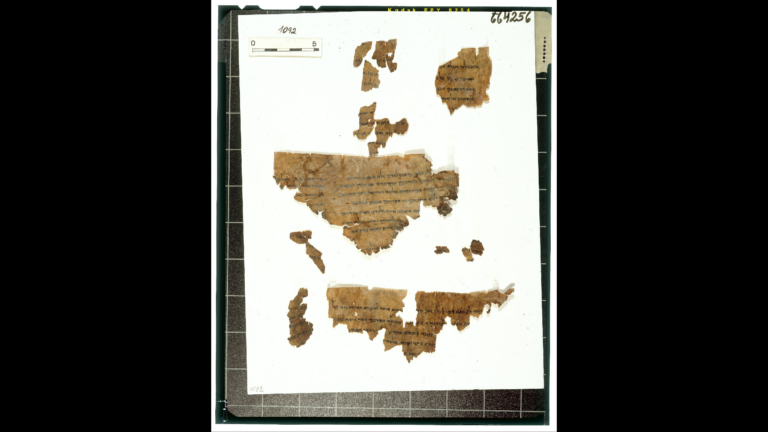
4Q47 (also known as 4QJoshᵃ), Plate 1092, is a small but extremely valuable fragment of an ancient handwritten scroll of the Book of Joshua found among the Dead Sea Scrolls and dated to about 2,100–2,200 years ago. Although the manuscript is very fragmentary, it closely matches the wording of Joshua found in modern Bibles, showing how carefully the text was preserved. What makes this fragment especially significant is that the top-right portion preserves the name Joshua son of Nun, written in Hebrew. In Hebrew, Joshua’s name is the same name later borne by the Messiah, Yahusha, making this fragment particularly meaningful to many believers. For them, it serves as direct ancient evidence of the Messiah’s name as it was written and used long before the New Testament period. Rather than introducing new teachings, this fragment powerfully confirms both the antiquity of the Book of Joshua and the early preservation of the sacred name it contains, while “Plate 1092” simply refers to the catalog number of the photograph used to document it.
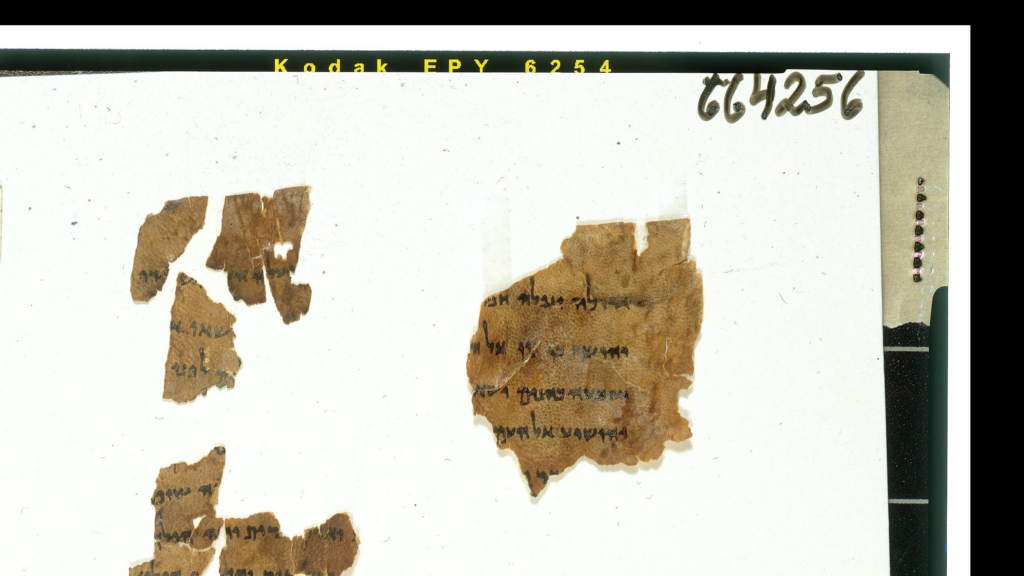
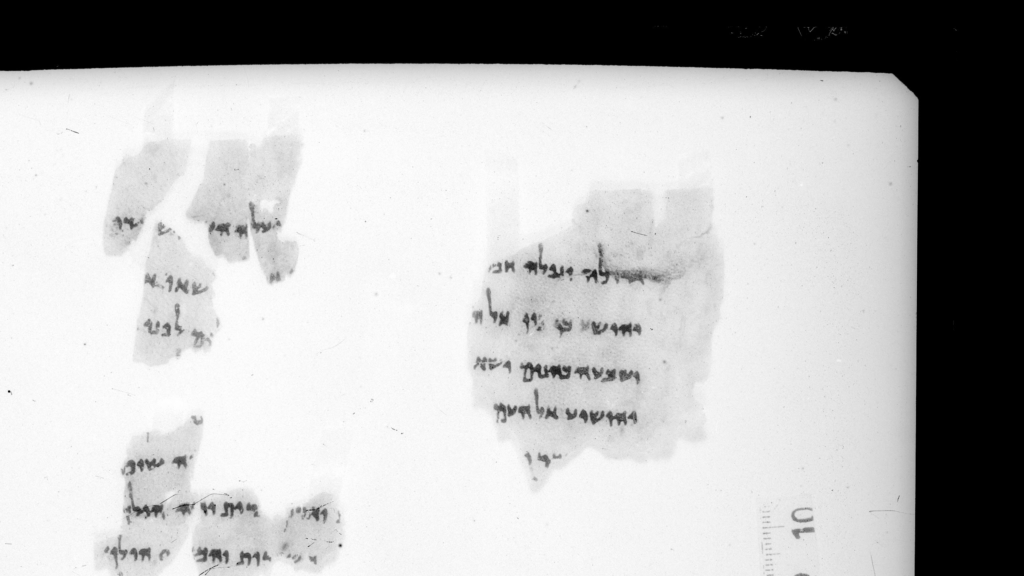
Below is a translation of the fragments shown above, illustrated through both the original photographs and infrared imaging for improved readability.
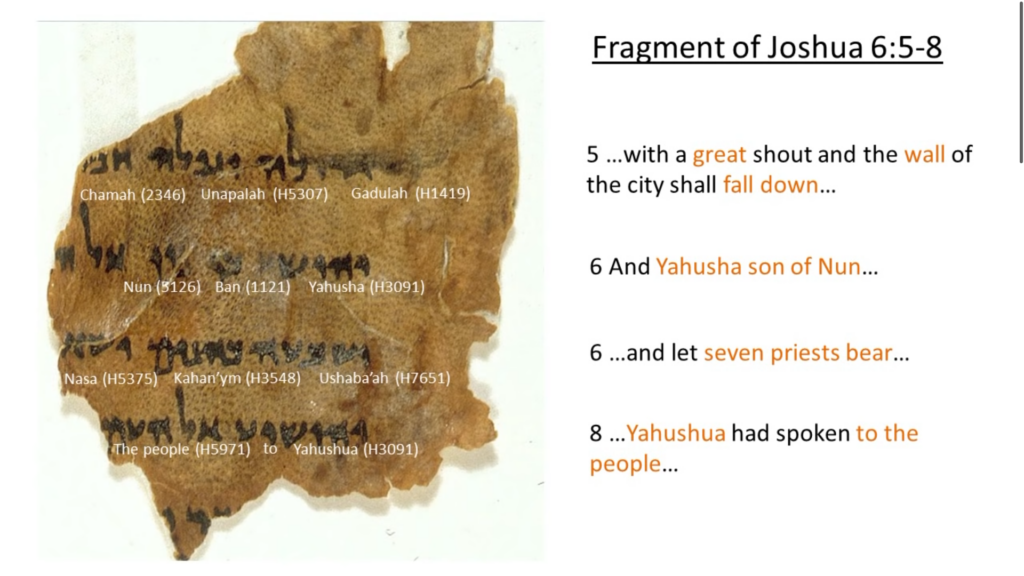
The image above shows the name Yahusha, son of Nun (commonly called Joshua), rendered in Hebrew script as Yod–Hey–Uau–Shin–Ayin, read from right to left. This fragment is particularly significant because it preserves the name in its original ancient Hebrew form—the same name later borne by our Messiah, Yahusha. As far as we know, this represents one of the oldest surviving examples of this sacred name, providing direct evidence of its usage centuries before the New Testament period.
I will be elaborating on this particular verse above which proves that Joshua was translated as Jesus from the Hebrew as they had the same name in the source text.
I will also be providing actual evidence of this, not a meme picture, this is just a placeholder for now!
To be continued…